Part of the series Writing a Book from Start to Finish
By J.E. Nickerson | Wise Thinkers Help Desk
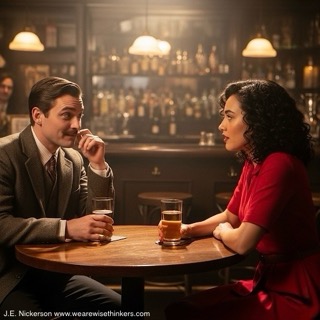
Some films grab you with action. Others with plot twists. But there’s a special category of storytelling that hooks you with rhythm—the kind that dances through dialogue like a tango. That’s the beauty of banter. It’s not just talk. It’s timing, chemistry, control. Whether it’s a verbal courtroom duel, romantic tension, or a high-stakes heist, banter keeps the audience locked in, not just to the story, but to the characters themselves.
Let’s explore how great banter works and why it makes the difference between a film that’s just good and one that becomes a rewatchable favorite.
⸻
🎯 What Is Banter, Really?
Banter is fast-paced, emotionally loaded, and full of subtext. It’s not idle chatter—it’s sparring with charm. Done well, it keeps scenes alive even when nothing explosive is happening.
⸻
🔍 Examples That Nail It
1. Brody, Hooper & Quint in Jaws
In Jaws, the monster may be the shark—but the soul of the movie lies in the banter between its three main characters. Sheriff Brody, marine biologist Matt Hooper, and shark hunter Quint each bring wildly different personalities to the table, and it’s their verbal sparring that drives the story forward. Their conversations shift from tense disagreements to humorous exchanges to deep, vulnerable storytelling.
When they’re on the boat, we see how banter becomes bonding. Hooper and Quint clash early on, but even that friction creates momentum. The iconic scene where they compare scars and Quint tells the haunting story of the USS Indianapolis isn’t just backstory—it’s banter layered with pain, pride, and growing mutual respect. The film works not just because of the threat in the water, but because we care about the men facing it together. Their dialogue feels real, rhythmic, and emotionally honest. It turns the movie into something more than a thriller—it becomes a study of human connection under pressure.
2. Mr. & Mrs. Smith
This movie thrives on tension—relational, emotional, and explosive (literally). Their banter is flirtation with an edge, weaponized charm. It makes the relationship feel alive, even when they’re trying to kill each other. The film wouldn’t work without that playful fire.
During the fight scene in their house, Angelina asks if Brad Pitt is okay and still alive. This wasn’t done because her character was worried about him—it was done to let him know that she was still hunting him. Throughout the movie, the banter shifts between dark humor wrapped around their profession as assassins and their roles as husband and wife.
3. Ocean’s Eleven
When you watch the chemistry between Danny Ocean (Clooney) and Rusty Ryan (Pitt), the best way to describe it is effortless. Their conversations feel like they’ve been having them for years—full of inside jokes, timing, and quiet respect. This kind of banter comes from writers who understand motivation, relationship dynamics, and the pacing of a scene.
The banter defines the tone of the movie: slick, cool, and always one step ahead. It’s why the exchanges between Danny and Tess, his ex-wife, carry such quiet intensity—the history is there, and we feel it in every line. As we discussed in the article on creating likable characters with conflicting desires, these characters pull you into the story. You want them to win. Even Terry Benedict—the man Danny is trying to rob—isn’t a flat villain. His banter with Tess and Danny reveals his values, his ego, and his emotional stake in the outcome.
⸻
🧠 Why Banter Works
• Pacing: It keeps scenes moving without needing explosions or stunts. Banter can bring more intensity than blowing something up ever could. Instead of holding a loaded gun to a character’s head, your hero can use banter and dialogue to bring his point across. Think again about Jaws. The banter between the sheriff, the marine biologist, and the fisherman drives the story forward. At times they fought, at times they found common ground through stories—but ultimately, the film is about how people work together to overcome a threat bigger than themselves.
• Character Chemistry: It builds connection faster than exposition. The reason why these movies have become cultural favorites is because of the interactions between the characters. Take away the banter, and you’re left with just a story about a casino, a movie about killers, or a movie about a hungry shark.
• Audience Engagement: It invites us to listen closely, catch the jokes, feel in on the secret.
• Tone Control: It sets the emotional vibe—light, dark, tense, funny—all through delivery.
⸻
✍️ Final Thoughts
Banter isn’t just entertainment—it’s a writing tool. When characters speak with rhythm and wit, we care more. We laugh, we listen, and we trust the story to keep surprising us. Banter drives the story forward through character interaction. It requires that you know the motives of the characters, their goals and how to create tension with dialogue. Never underestimate the power of a well-placed line delivered just right.
While banter can drive stories forward, using it between likable characters with opposing desires adds a new depth of story telling to your work. We look at how to develop this kind of story in the article When Good People Collide: Writing Conflicting Desires Between Likable Characters
Ready to take your writing to the next level? Learn about the techniques and practices that create compelling writing. Visit We Are Wise Thinkers Help Desk for inspirational resources to unlock your inner creative writer.
Ready to write characters that do more than act — but wrestle with why?
Download Questions to Ask Your Characters About Power, Morality, and Choice and start building stories that challenge, inspire, and stick with your readers long after the final page.
Questions to ask your characters about power, morality and choice
Enjoying this? Find the answers to your biggest self-publishing questions.
Write it. Publish it. Sell it. My full guidebook to publishing your best seller is available now — get it here.
📚 And if you’re new here, I’m J.E. Nickerson — faith based author and inspirational storyteller. You can check out my books here or follow me on YouTube for more inspiration and encouragement on this writing life.
🧠 Writing Exercise: Why Banter Works
1. Pacing Practice
- Exercise: Write a scene where two characters are stuck waiting (e.g., at a bus stop, hiding from danger, or waiting for food to cook).
- Goal: Use only dialogue to keep the scene moving—no explosions, no sudden action. Make the banter itself feel like the “engine” of the story.
2. Building Chemistry
- Exercise: Pair up two characters who normally wouldn’t get along (e.g., a strict teacher and a rebellious student, or a cop and a thief forced to cooperate).
- Goal: Through their banter, show their personalities clashing and slowly finding common ground. No exposition dumps—let the audience learn about them through their words.
3. Engaging the Audience
- Exercise: Write a short dialogue where two characters talk about something trivial (e.g., coffee orders, socks, or the weather).
- Goal: Add wit, subtext, or a private joke that makes the reader feel like they’re in on something special.
4. Controlling Tone
- Exercise A (Light): Write a banter scene that makes the reader smile while characters face a stressful situation.
- Exercise B (Tense): Rewrite the exact same scene, but change the rhythm, word choice, and tone to create tension or unease.
- Goal: See how banter alone can shift the emotional vibe without changing the setting or stakes.
5. Film Study Prompt
- Watch/Recall: Pick a favorite banter-heavy scene (e.g., Jaws, Ocean’s Eleven, When Harry Met Sally).
- Exercise: Break it down into three beats: conflict, humor, and resolution. Then, try writing your own scene using the same structure with different characters.
👉 Final Challenge: Write a two-page scene using banter as the primary driver of pacing, chemistry, engagement, and tone. Keep description minimal—let the dialogue carry the weight.
The power of banter in fiction ~Reel~
Enjoy this short reel that gives an example of the benefits of sharp banter in writing.
Discover more from We Are Wise Thinkers
Subscribe to get the latest posts sent to your email.
 We Are Wise Thinkers
One thought on “Verbal Sparring & Smooth Flow: Why Banter Makes stories Unforgettable”
Comments are closed.