
Part of the series How to Write a Book from Start to Finish
By J.E. Nickerson | Wise Thinkers Help Desk
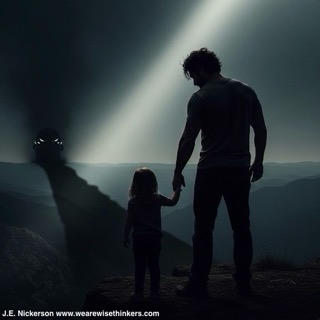
Some of the most gripping stories don’t come from superheroes or fantasy worlds. Instead, they come from ordinary people—regular men who find themselves thrust into impossible situations, forced to make tough, often morally ambiguous choices to protect their loved ones. These aren’t tales of flawless heroes; they are raw, real, and messy.
Films like No Escape, Ransom, and Taken strip away the idea of a clean victory. These characters don’t have superpowers or endless resources. They have desperation, instinct, and love—and sometimes that means crossing lines they never thought they would.
⸻
No Escape: The Ordinary Dad in a Deadly Jungle
In No Escape (2015), Owen Wilson plays an American father whose family is caught in the middle of a brutal political uprising in Southeast Asia. He’s not a soldier or a trained fighter. He’s a regular man trying to navigate a nightmare.
Wilson’s character embodies real fear and panic—the kind of fear that pushes a person into survival mode. Every decision is about keeping his wife and kids alive, even when it means running rooftops, hiding in shadows, and facing ruthless enemies. His journey reminds us that survival often isn’t heroic in the traditional sense. It’s raw, imperfect, and full of moral uncertainty. One of the many turning point scenes in this movie shows him brutally killing a soldier with his bare hands in order to protect his family who are hiding a few feet away.
⸻
Ransom: Gambling with Morality to Save a Child
Mel Gibson’s Ransom (1996) takes a different angle on the desperate parent trope. Here, Gibson’s wealthy father faces the kidnapping of his son, but instead of paying the ransom, he turns the tables—offering the ransom money as a bounty on the kidnappers.
This choice shocks viewers because it feels reckless and cold. Yet it’s born out of desperation and a fierce refusal to be a victim. Gibson’s character wrestles with morality as he gambles with lives in a dangerous game of power and control. Ransom shows us the cost of protection can be high, and sometimes the most extreme decisions come from the deepest love.
⸻
Taken: When Vengeance Becomes Survival
Taken (2008) gave Liam Neeson a career-defining role as a father with a “particular set of skills” hunting down the men who kidnapped his daughter. His character straddles the line between protector and avenger, using violence and intimidation to reclaim his family.
What makes Taken compelling is not just the action, but the moral complexity. Neeson’s character doesn’t just rescue his daughter; he changes in the process. He doesn’t start out the movie wanting to use his skills to hurt and kill. Instead, he is forced to use his skills in order to save someone who is helpless. His journey blurs the line between justice and ruthlessness, and viewers are left questioning what price we pay to protect the ones we love.
⸻
What These Stories Teach Writers About Character Motivation
For writers, these films are masterclasses in creating believable, compelling characters. The motivations aren’t abstract or grandiose—they’re visceral and deeply personal. Love of family and the need to survive are what drives the heroes.
• Fear of loss drives decisions, even when those decisions are flawed or dangerous.
• Characters make choices that change their moral compass. Just as we discussed in the article, When Characters Can’t Come Back: Writing Irreversible Change, these stories make people change in unique ways that can’t be reversed. It opens the eyes of the character to parts of the world that leave a lasting change on them.
• Morality becomes a moving target when survival and family are at stake. When your characters are facing high stakes situations, clear boundaries of right and wrong fall to the wayside. Even if our characters start the story with clear morals they don’t intend to violate, the story situations force them to betray their beliefs, not in the name of the greater good, but because the people they care about are depending on them for safety and survival.
If you want your characters to resonate, ask yourself: What would they be willing to do for their family? And how far would they go before losing themselves?
⸻
Writing the Moral Grey Zone
No one said the right choice is always the easy one. In fact, some of the most powerful storytelling happens because the characters don’t have easy answers. They’re messy. They’re conflicted. They are forced to hurt or even kill people in order to protect the ones they love.
As writers, it’s tempting to give audiences clear heroes and villains, neat resolutions, and tidy endings. But life isn’t like that—and neither are these stories.
Pushing your characters into situations where every choice costs something makes your story real. It makes it unforgettable.
⸻
Your Voice, Your Stories
If you’re drawn to stories about ordinary people thrown into extraordinary circumstances, remember: it’s the human heart at the center that matters most. Your characters don’t need to be perfect—they need to be honest.
Write with courage. Write with compassion. Write the choices that break your characters—and show what it means to survive, imperfect and real.
✍️ Want to Go Deeper with Your Characters?
Download the Character Profile Checklist to build emotionally rich, layered characters your readers will never forget.
This free resource helps you explore your character’s backstory, motivation, wounds, and inner contradictions—so you can write with depth and confidence.
👉 Get the Character Profile Checklist now »
Ready to write characters that do more than act — but wrestle with why?
Download Questions to Ask Your Characters About Power, Morality, and Choice and start building stories that challenge, inspire, and stick with your readers long after the final page.
Questions to ask your characters about power, morality and choice
✍️ Ready to publish your book with confidence?
Grab your copy of You Are the Author: Creating and Selling Your First Book by J.E. Nickerson—a clear, encouraging guide to help you write, publish, and launch your first book the smart way. Finally—answers to your biggest self-publishing questions
📚 And if you’re new here, I’m J.E. Nickerson — faith based author and inspirational storyteller. You can check out my books here or follow me on YouTube for more inspiration and encouragement on this writing life.
For more articles about character development and motivation, visit the We Are Wise Thinkers Help Desk and find resources to take your writing to the next level.
Want to see these principles in action? Watch the reel to see how you can build complex characters and leave clues for your reader to follow that shows the change they experience.
Discover more from We Are Wise Thinkers
Subscribe to get the latest posts sent to your email.


3 thoughts on “When Good Characters Are Pushed to the Edge: Family, Fear, and Morally Grey Choices”
Comments are closed.