
Part of the series Writing a Book from Start to Finish
By J.E. Nickerson | Wise Thinkers Help Desk
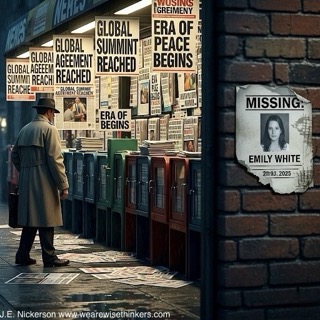
In crime fiction, we often think the most shocking cases will naturally rise to public attention—news vans, press conferences, entire cities on edge. But what happens when a devastating crime takes place during a moment when the world isn’t watching?
History has given us real examples.
Gary Ridgway, known as the Green River Killer, was arrested in November 2001 after decades of haunting investigations. At any other moment in American history, his capture would have dominated every headline. But this was just two months after the 9/11 attacks. The country was deep in collective grief, war discussions, and national security panic. A decades-long hunt for one of the most prolific serial killers in U.S. history was barely a blip on the radar.
That’s not just true crime—it’s a writing lesson.
As authors, we can use the weight of national or global events to create deeper emotional resonance in our stories. A character’s tragedy might be overlooked, not because no one cared, but because everyone was overwhelmed by something bigger.
Let’s break down how to write those kinds of stories—and why they hit so hard.
⸻
🔸 The World Wasn’t Watching
When your story takes place during a major event—war, disaster, political upheaval—it gives you a unique opportunity to create contrast. You’re writing about a character who is suffering personally while the world is grieving or celebrating something else.
Examples in fiction:
• A missing person during election week.
• A murder on the same day as a major protest or parade.
• A victim whose face never made the news because a famous figure died that same night.
The pain isn’t just the crime—it’s the invisibility of it.
⸻
🔸 Invisible Victims
Not all characters are heard, and not all stories are amplified. Writing “invisible victims” gives you space to explore:
• Whose stories get told and whose don’t?
• How does a character cope when justice is slow because no one is paying attention? The movie Erin Brockovich focuses on an economic disaster in a small town where a chemical plant’s dumping polluted the water supply. While similar incidents happened elsewhere, this town’s story was spotlighted, exposing a crisis that might otherwise have gone unnoticed.
• What happens to families who lose someone while the rest of the city is distracted?
This makes your character’s journey deeply human, and the injustice feel personal. These are the stories readers don’t forget—because they reflect the quiet grief we don’t always see on the front page.
⸻
🔸 The Case That Got Swallowed by History
Your fictional case may be groundbreaking, but if it happens during a moment of mass upheaval, it may not look that way to the public.
And that’s the point.
Use this tension to your advantage:
• Have your protagonist struggle with the feeling that no one cares.
• Let the victim’s story unfold between the cracks of bigger events.
• Institutions often decide what stories deserve immediate attention and which get sidelined or delayed. For example, in the movie The Post, The Washington Post prioritizes uncovering and reporting on the political controversy surrounding the Pentagon Papers. This focus on political news meant that other pressing national issues sometimes received less coverage, highlighting how editorial priorities shape what the public sees and when.
The emotional power comes from the idea that the crime you are creating should have changed everything—but it didn’t. Not because it wasn’t horrific, but because the timing buried it.
⸻
🔸 Parallel Griefs
In real life, grief doesn’t wait for the right time. It shouldn’t wait for a convenient time in your story either.
Consider showing how:
• Your lead character is chasing justice for one person while the city mourns something else.
• A detective can’t get airtime for a public alert because the news is covering a war or scandal.
• A survivor feels lost not just in trauma, but in isolation, because the world has no space for their pain.
These stories become layered and profound when you let grief overlap. You’re not competing with history—you’re showing how individual pain often gets eclipsed by collective pain.
⸻
Digging Deeper:
When you build your story world, don’t just build a timeline of events. Build a timeline of attention.
Ask yourself:
• What else is happening in the world of my story?
• What headlines are dominating the public?
• What’s being ignored while my character is falling apart? Showing the effects of your character’s situation against the backdrop of a larger national event gives your story powerful context. While the national event captures the public’s attention, your character’s personal journey is just as important to them — even if it goes unnoticed by everyone else.
You don’t need to dwell on real-world history unless it’s relevant—but you can mirror this kind of emotional layering to make your fiction feel grounded in reality.
⸻
🖋 Final Thoughts
Crime stories don’t have to be loud to matter. In fact, some of the most emotionally powerful ones are about the cases no one noticed—until someone finally refused to let them be forgotten.
Use that silence. Use that contrast.
And give voice to the stories the world almost missed.
Sometimes the things a character does in order to reach their goal, solve the crime or help someone, makes them cross lines they never imagined they would. When they make these choices, it can change our characters permanently and not always for the best. In the article When Good Characters Cross the Line: The Moral Cost of Doing What Feels Necessary
📚 And if you’re new here, I’m J.E. Nickerson — faith based author and inspirational storyteller. You can check out my books here or follow me on YouTube for more inspiration and encouragement on this writing life.
Discover more from We Are Wise Thinkers
Subscribe to get the latest posts sent to your email.

