
Part of the series “How to write a book from start to finish”
By J.E. Nickerson | Wise Thinkers Help Desk
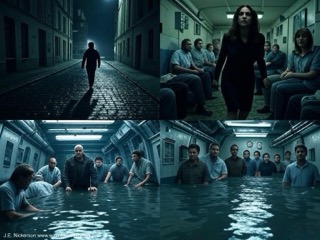
Setting isn’t just the backdrop for action—it’s an invisible character that shapes mood, tension, and the psychology of everyone in the story. A bright sunlit street can feel freeing, while a narrow alley under flickering lights can feel like a trap. The right environment can turn an ordinary scene into a nerve-wracking experience, and the wrong one can flatten even the most dramatic story.
Let’s look at some unforgettable films to see how masters of storytelling use setting as a tool.
⸻
Environment Shapes Mood and Tension
In Frantic (1988), Harrison Ford navigates Paris searching for his missing wife. The streets aren’t just unfamiliar—they’re disorienting, hostile, and labyrinthine. The environment amplifies his desperation and uncertainty, showing how setting can directly shape suspense.
K-19: The Widowmaker (2002) demonstrates tension in a sealed metal coffin. The crew is trapped inside a Soviet submarine under pursuit. Every sonar ping, every creak of the hull escalates the psychological pressure. The confined space makes fear unavoidable and suspense palpable.
Panic Room (2002) takes the “safe space” and flips it. Jodie Foster’s fortified room, designed for protection, becomes a claustrophobic cage when intruders invade. The environment itself creates a relentless pressure on characters and audience alike.
⸻
Claustrophobic and Eerie Spaces
Confined spaces naturally heighten tension. In Crawl (2019), rising floodwaters and tight crawl spaces trap characters with deadly alligators. Every squeeze of space and surge of water amplifies fear.
Hitchcock’s Lifeboat (1944) shows psychological tension at its purest. Survivors adrift in a tiny lifeboat have nowhere to hide. Every interaction is intensified; every flaw, suspicion, or secret becomes magnified. Confinement drives conflict as effectively as any plot twist.
⸻
Sensory Details and Psychological Unease
Atmosphere is made vivid through sensory detail. The Bone Collector (1999) immerses viewers in dimly lit crime scenes where echoes, dust, and subtle smells make ordinary spaces terrifying. In writing, emphasizing sound, smell, or texture can evoke deep psychological unease in readers.
⸻
Symbolism and Metaphor in Settings
Settings can also reflect internal states. Man on a Ledge (2012) literally places the protagonist on the edge of a skyscraper. The ledge mirrors his emotional precariousness—one misstep could be fatal.
The Great Gatsby (1974) uses Gatsby’s mansion and the valley of ashes to externalize longing, emptiness, and moral decay. The physical spaces reflect character psychology and thematic weight.
⸻
Takeaway for Writers
Whether in film or prose, setting isn’t decoration—it’s a tool. Confinement, sensory detail, and metaphorical spaces allow you to:
• Heighten tension without adding plot twists.
• Amplify psychological pressure on characters.
• Turn ordinary locations into emotionally resonant spaces.
Think of setting as a silent partner in storytelling: the tighter the space, the stronger the psychology, the more your readers or viewers feel the pressure.
⸻
Creating compelling atmospheres is important to your story but your characters still drive your story forward. Read the following articles to learn how to create memorable characters who deepen your story.
➡️ How to Create a Character Profile That Actually Helps You Write
➡️ The Quiet Warnings: How Side Characters Reflect the Hero’s Path
➡️ The Power of Vulnerable Characters in Fiction
Whether you’re starting a new story or revisiting one that needs depth, this checklist will walk you through it—one thoughtful step at a time.
📝 Download the Character Profile Checklist and start building from the inside out.
📚 And if you’re new here, I’m J.E. Nickerson — faith based author and inspirational storyteller. You can check out my books here or follow me on YouTube for more inspiration and encouragement on this writing life.
⸻
Mini Worksheet: Practicing Psychological Settings
1. Mood Shift:
Take a simple action (making coffee, folding laundry). Write it once in a calm setting, once in a threatening one. How does atmosphere change character psychology?
2. Boxed-In Tension:
Write a scene in a confined space (lifeboat, submarine, elevator, locked attic). Focus on the psychological pressure and character responses.
3. Sensory Unease:
Describe a familiar location through a character who feels unsafe. Use at least three senses. Turn ordinary elements into triggers for tension.
4. Symbolic Setting:
Pick an emotion (grief, joy, paranoia). Create a setting that mirrors it. Show it through description and character reaction, without naming the emotion.
5. Atmosphere Swap Challenge:
Take a key scene from your project. Rewrite it in a high-pressure or confined setting(stormy lifeboat, submarine under pursuit, stalled subway). Observe how the setting reshapes character choices and tension.
Discover more from We Are Wise Thinkers
Subscribe to get the latest posts sent to your email.

