
Back to Samantha Leary Psychological Thrillers
Previous 41 Cleanse Us
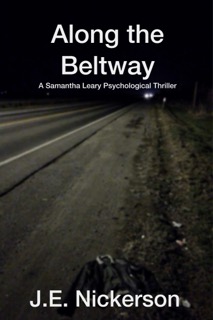
There are events you survive, and then there are events that don’t stay contained inside memory—they rewrite the way a person processes everything that comes after.
Samantha Leary moves through Pleasant Falls like everything can be reduced to recordable fact. Investigator. Clinical observer. Tablet in hand, scene to file, details locked into sequence. No interpretation. No attachment. That structure has always been the barrier between her and what she documents.
Until a domestic incident breaks that separation cleanly enough that it can’t be ignored.
It doesn’t arrive as revelation. It arrives as interference—small at first, then steady, then impossible to filter out. The system she’s relied on doesn’t fail loudly. It starts to slip in quiet places: timing, focus, the space between observation and reaction. What used to be containment begins to feel like pressure with nowhere to go.
Across Pleasant Falls, Stacy enters with a different kind of control. Not observation, but assessment. She is tracking a past version of Tyler, a man she once knew, measuring distance between what she remembers of him and what he has become. Every step is a comparison. Every detail a correction or confirmation.
The search ends at Helping Hands Outreach.
Inside, there is no pursuit left to maintain. Only intake procedures. Chairs lined with standard spacing. Paper forms with timed fields. A system designed to hold people steady long enough for stability to replace motion.
No breakthrough waiting at the end of it. No clean resolution. Only structure absorbing what arrives and keeping it from spilling outward.
Two women moving through the same city under completely separate systems of control. One still trying to document reality without being altered by it. The other already inside a framework that does not ask for interpretation—only participation.
For Mature Audiences Only
- Publisher : We Are Wise Thinkers
- Accessibility : Learn more
- Publication date : June 12, 2026
Available on Amazon

